Reverse Engineering of an MP4 Player Platform

Engineering portfolio article · Hardware teardown, CAD reconstruction, and architecture validation

Reverse-engineering workflow focused on rebuilding a legacy MP4 platform under scarce documentation, combining physical PCB analysis, custom KiCad libraries, and confidence-driven schematic reconstruction.

  • Reverse engineering
  • KiCad
  • PCB teardown
  • Architecture modeling
  • LTspice

Project Scope & Motivation

  • Reverse engineer a consumer MP4 platform with scarce technical disclosure.
  • Reconstruct architecture and design intent across power, clocks, storage, audio, and IO.
  • Build an auditable technical baseline for subsequent schematic and simulation work.

SPC Internet 8488 MP4 player reference unit
Fig. 1 — Physical reference unit used as the baseline for reverse engineering.
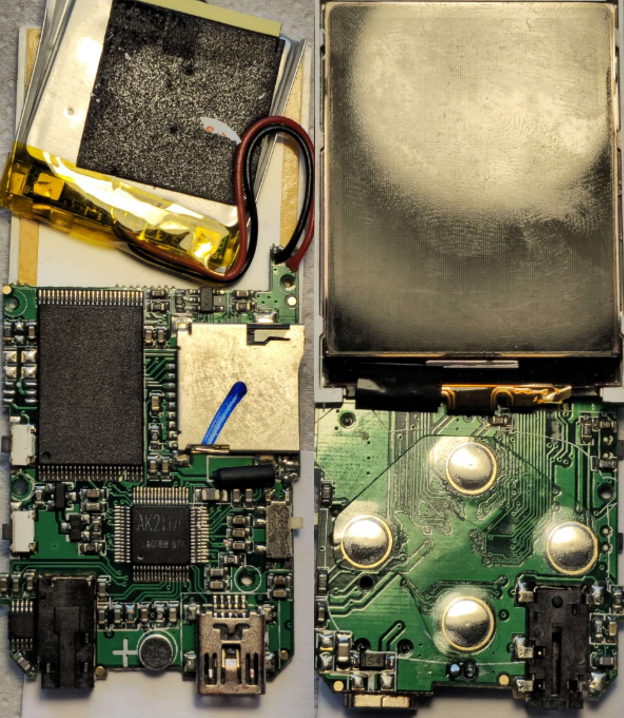
PCB photos showing routing constraints and layer assumptions
Fig. 2 — Real PCB photography indicates routing density consistent with a likely 4-layer stack.

Physical Product Identification & PCB Teardown

  • Analysis anchored to the exact commercial unit, storage variant, and exposed interfaces.
  • Teardown and high-resolution inspection highlighted routing bottlenecks and return-path patterns.
  • Early layer-stack hypothesis: signal/plane/plane/signal as the most plausible topology.

Documentation Search Under Scarce-Information Constraints

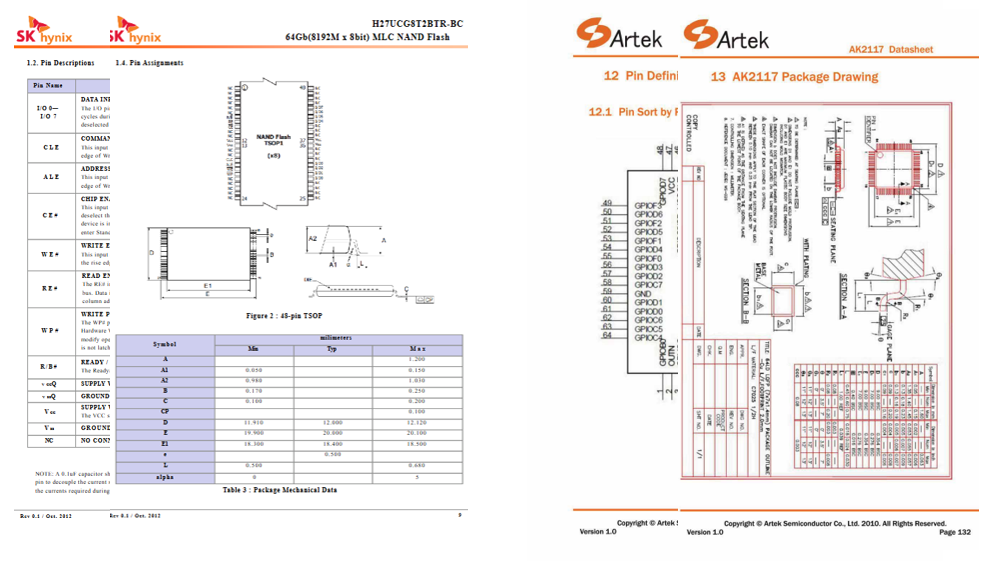
  • Multi-source triangulation across package markings, archived technical notes, and distributor remnants.
  • Cross-checked partial and adjacent-family datasheets to constrain unknown blocks.
  • Maintained explicit confidence levels to separate confirmed data from inferred assumptions.
Documentation recovery and triangulation workflow
Fig. 3 — Documentation recovery process combining fragmented sources into a coherent evidence trail.
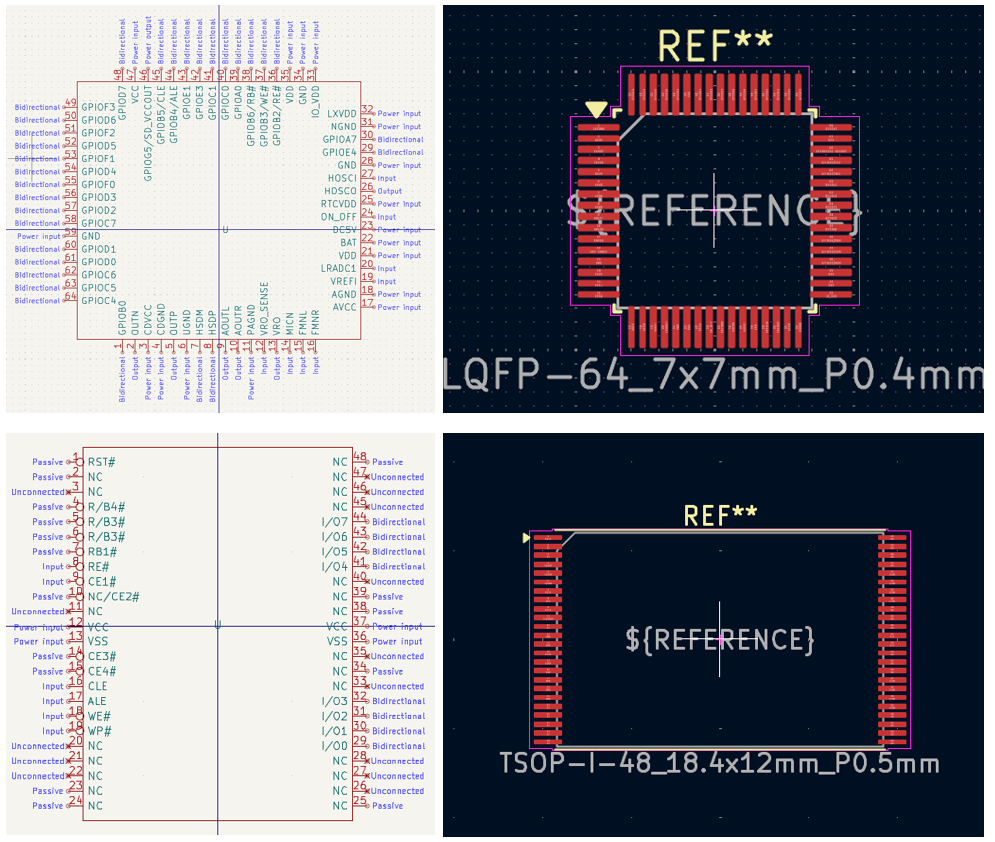
Custom KiCad symbols and footprints for non-standard components
Fig. 4 — Custom KiCad symbols and footprints reconstructed for undocumented components and connectors.

KiCad Library Reconstruction

  • Created missing symbol and footprint assets for uncommon packages and proprietary connectors.
  • Established naming/versioning discipline to keep evidence and CAD synchronized.
  • Recovered enough library coverage to support end-to-end schematic and PCB recreation.

Footprint Verification & Mechanical Consistency

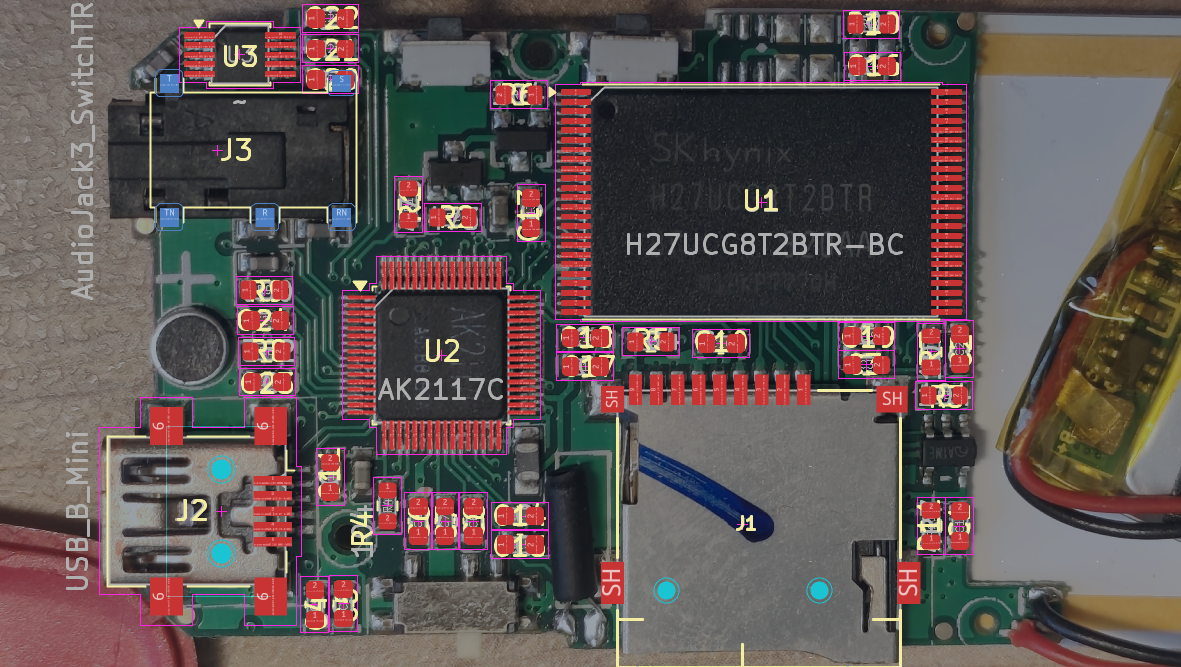
  • Executed overlay checks against calibrated high-resolution PCB photography.
  • Validated pitch, body size, and pin-1 orientation against available mechanical references.
  • Used discrepancy tracking to iteratively converge footprint fidelity before net-level reconstruction.
Overlay verification process between PCB photos and CAD footprints
Fig. 5 — Overlay workflow for dimensional and positional verification of reconstructed footprints.
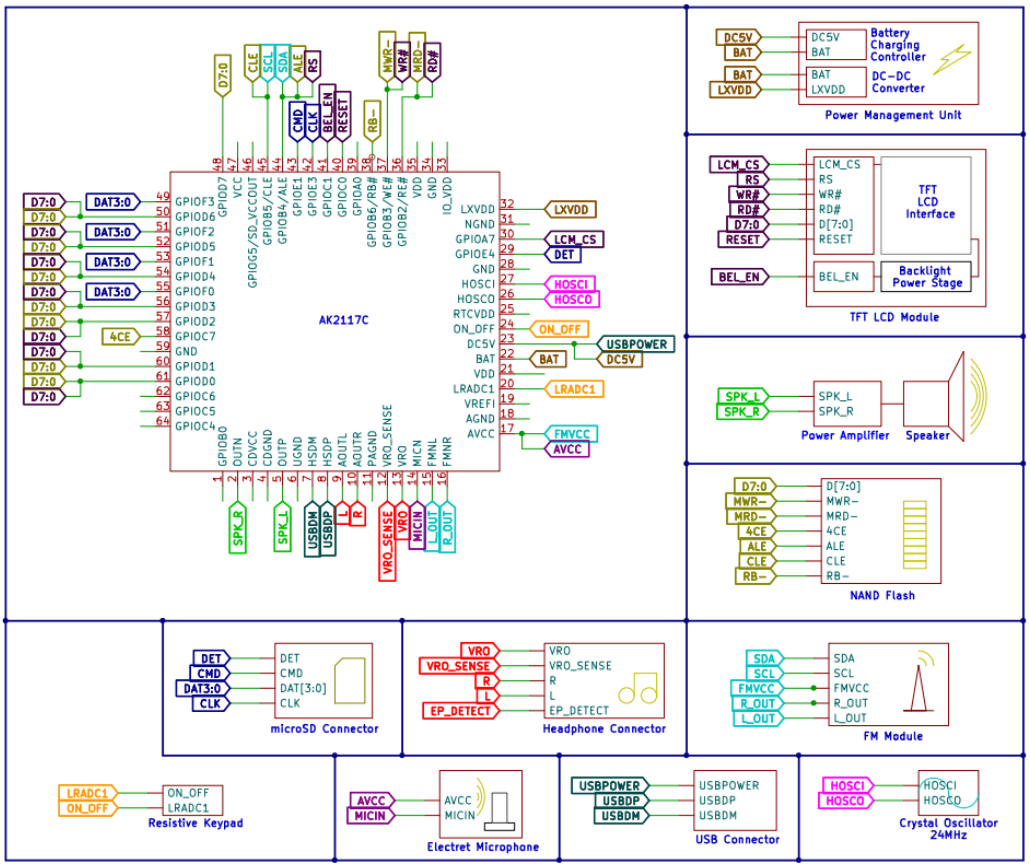
Functional block diagram hypothesis for MP4 platform
Fig. 6 — Iterative functional block hypothesis with confirmed versus inferred subsystems.

Functional Block Diagram

  • Built an architecture hypothesis partitioned into validated and provisional blocks.
  • Used the diagram to prioritize unknown nets and measurement campaigns.
  • Maintained traceability between block assumptions and physical/documentary evidence.

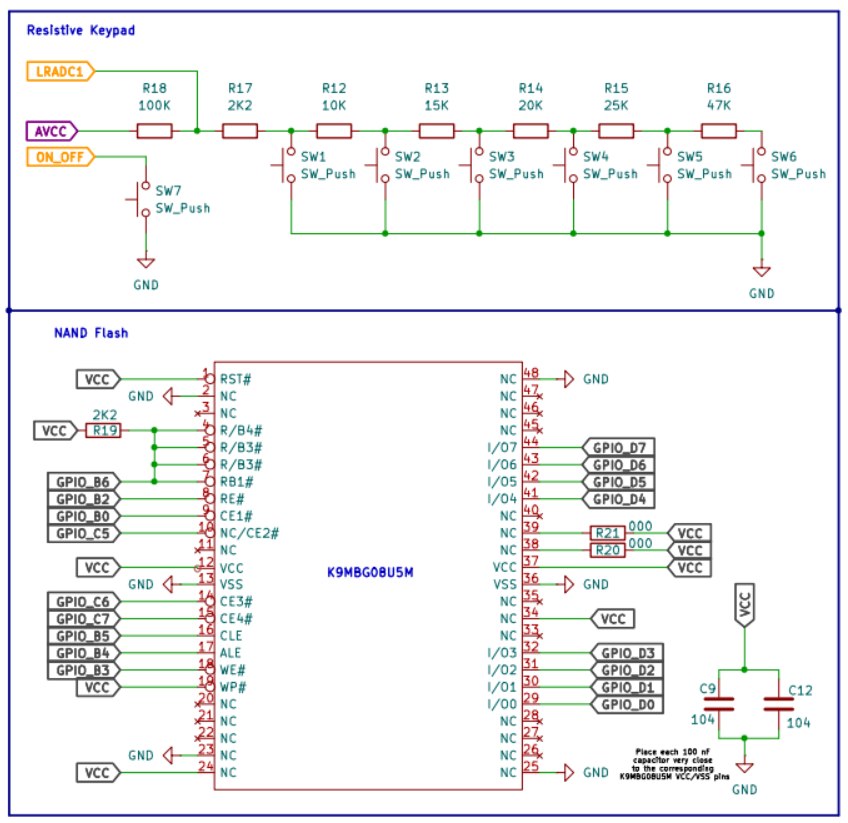
Early Schematic Hypotheses & Progressive Reconstruction

  • Drafted initial rails, decoupling, storage interface, and audio chain topologies.
  • Refined hypotheses as continuity work and pin mapping confirmed key nets.
  • Captured uncertainty explicitly to support simulation-ready revisions.
Initial schematic reconstruction hypotheses
Fig. 7 — Preliminary schematic fragments showing progressive confidence-based reconstruction.
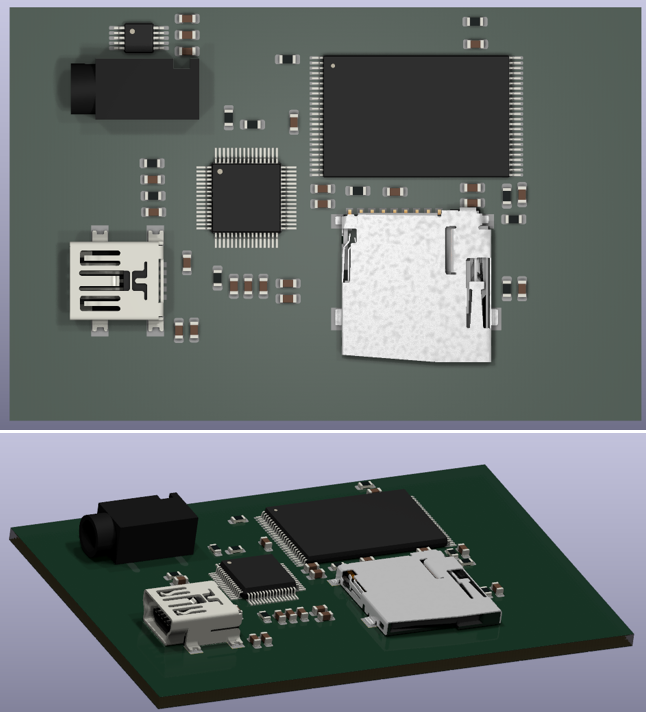
Preliminary KiCad 3D model of reconstructed board
Fig. 8 — Early KiCad 3D CAD model used to validate placement logic and connector clearances.

Preliminary CAD Reconstruction (KiCad 3D)

  • Generated a first-pass 3D reconstruction to verify mechanical compatibility.
  • Checked connector alignment, keep-out behavior, and placement coherence.
  • Used 3D feedback to iterate footprint assumptions before detailed routing studies.

Current Status & Next Steps

  • Continue identifying schematic fragments and validating behavior through LTspice experiments.
  • Reduce uncertainty around power sequencing, analog biasing, and interface constraints.
  • Final objective: propose a modernized architecture with stronger power efficiency, updated interfaces, improved ESD/EMC, and clean documentation.

Personal Context

  • Independent project developed outside formal studies with a portfolio-oriented scope.
  • This page presents representative fragments only; full evidence and rationale are documented in the PDF article.
  • All publication decisions are guided by ethical reverse-engineering boundaries and IP responsibility.

Full Technical Article (PDF)

This page is the curated narrative. The PDF contains the complete portfolio article, methodology details, and supporting technical evidence.